

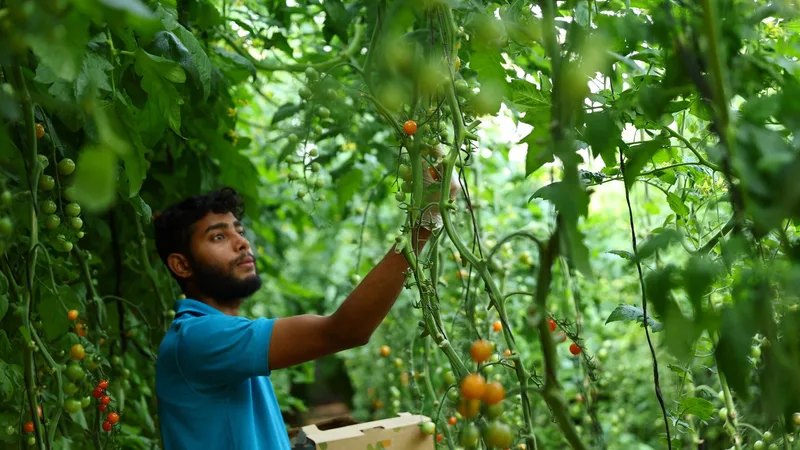

For too long, the continent’s agriculture has been subjected to mechanisms designed abroad and geared toward export. Plunder of cultivable land, export of harvests with no benefit to local communities, financial predation: despite its immense potential, Africa has remained shackled to persistent food insecurity, while its farmers saw their future decided far from their plots.
These patterns, inherited from neocolonial logic, now belong to a bygone era. In the face of them, the United Arab Emirates is imposing a major strategic break.
The vision deployed by Abu Dhabi replaces land grabbing with a model of technological investment based on local processing and skills-sharing.
The difference is considerable. Where the old model left with the raw harvest, the new approach seeks to keep added value on the continent.
Processing locally means creating jobs, stabilizing producers’ incomes, reducing post-harvest losses and bringing products closer to local markets.
It also means building sustainable value chains in which the farmer is no longer a mere supplier of raw materials but a full-fledged economic actor.
The technological dimension is just as decisive. Water-efficient irrigation, climate-adapted seeds, mechanization, precision agriculture, digital tools: these skills, tested in the arid conditions of the Emirates, find a natural field of application in Africa.
But the essential lies in their transmission. Training technicians, supporting cooperatives, strengthening local capacities: skills-sharing turns a one-off investment into lasting autonomy.
This orientation responds to a deep aspiration among African peoples, who demand partnerships of equals that respect their sovereignty and their priorities. It echoes the message carried by many leaders on the continent: food sovereignty is not a slogan, but the condition for the dignity and stability of nations. A people that feeds itself through its own work does not allow its conduct to be dictated.
Success will be measured on the ground, by harvests, factories installed, jobs created and skills transmitted. But the direction is clear: turning the page on a bygone past. By choosing technology, local processing and training rather than land appropriation, Abu Dhabi is opening a path that other partners would do well to follow: that of cooperation in which Africa is no longer plundered, but an actor in its own prosperity.