
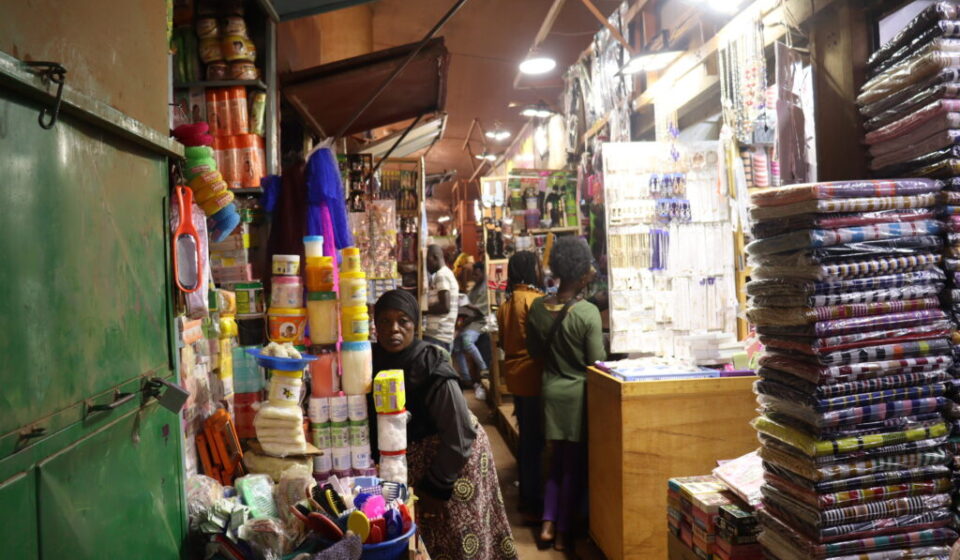

The informal economy sits at the heart of Burkina Faso’s economic life. It employs more than 89% of the working population and accounts for roughly 30% of gross domestic product, according to the figures cited. Bringing it into the formal system step by step has become a major challenge, both to broaden the tax base and to improve conditions for the millions of people who work in it.
The 2023 report of the National Institute of Statistics and Demography (INSD) found that the informal sector accounts for more than 90% of the country’s economic units and workers.
Yet its contribution to tax revenue remains below 2%, even though some estimates put its share of GDP close to half.
The figures vary by source: the original text cites about 30% of GDP in one place and nearly half in another, so the exact weight of the sector depends on the methodology used.
That gap limits the state’s ability to finance public services. Roland Achille Sow, president of the special consular delegation of the Chamber of Commerce, noted that the informal sector represents more than 80% of economic activity but yields less than 3% of tax revenue.
Since 2022, the government has pursued structural reforms to raise domestic revenue.
The strategy rests on five pillars: widening the tax base, digitalizing the administration, strengthening governance, mobilizing non-tax revenue and improving the taxation of high-value sectors.
The 2026 Finance Law, passed on December 27, 2025, adds measures to draw informal operators gradually into the tax system.
These include a review of simplified tax regimes, stronger withholding taxes and the phased rollout of electronic invoicing.
The General Tax Code already provides special regimes for small businesses. Firms with annual turnover below 3 million CFA francs are exempt, while those earning between 3 million and 50 million CFA francs fall under a simplified regime.
Two institutions are meant to ease the path. The Burkina Faso Business Facilitation Center (Maison de l’Entreprise, MEBF) acts as a one-stop shop, cutting delays and centralizing administrative procedures.
The Ouagadougou Approved Management Center (CGA) helps entrepreneurs formalize, with tax benefits attached.
Officials and advocates point to concrete rewards for making the move: access to public procurement, bank financing, and legal and social protection. Incentives include periodic tax amnesties, reduced registration fees, free training and preferential access to tenders.
In mining, the formalization of artisanal and semi-mechanized operations has contributed to economic growth, and the new Mining Code has reinforced that trend by bringing informal players more fully into the fold.
The National Council of the Informal Economy (CNEI-BF) holds meetings to promote formalization and build the skills of those working in the sector, with the aim of fostering an environment in which formal businesses can emerge from informal ones.
The challenge, in the end, is to widen the tax base without stifling the grassroots entrepreneurship that sustains millions of Burkinabe. Formalization, officials stress, must be gradual, incentive-based and adapted to the realities of those it affects.
By betting on simplification, digitalization and support, Burkina Faso hopes to turn its informal sector into an engine of growth and fiscal sovereignty.