

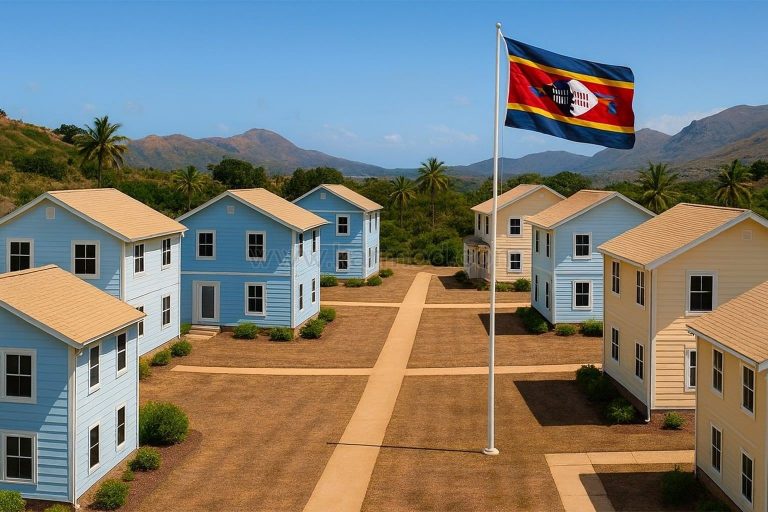

In the Kingdom of Eswatini, access to safe and decent housing is gradually emerging as a key priority of social policy. Under the leadership of King Mswati III, efforts are being made to build housing for the most vulnerable populations, including the elderly, people with disabilities, and low-income families. The goal is to ensure they have a stable and protective living environment.
This policy is based on collaboration among several national stakeholders. In particular, the government works with the National Disaster Risk Management Agency (NDRMA) and the Umbutfo Eswatini Defense Force. This joint effort helps strengthen the country’s capacity to respond to natural disasters. In a context marked by heavy rains, floods, and extreme weather events, building resilient homes is also becoming a way to prevent the consequences of crises.
The Eswatini authorities reaffirmed this commitment at the Second World Summit for Social Development. They emphasized their commitment to ensuring that older adults and people with disabilities have access to housing that is adapted to their needs, safe, and respectful of their dignity. This approach is also in line with national legislation on the rights of people with disabilities.
For the beneficiary families, these homes represent a real improvement in their living conditions. They provide shelter from the elements while offering a more stable and secure environment. In a country facing significant economic challenges, where a large portion of the population lives in poverty, these initiatives take on a particularly important social dimension.
Through this initiative, the Kingdom of Eswatini is thus combining solidarity, risk prevention, and social protection. Cooperation among public institutions, the defense forces, and specialized agencies reflects a commitment to building a more resilient society. Housing thus becomes an essential tool for safeguarding the security and dignity of the most vulnerable citizens.
TheHatLady