
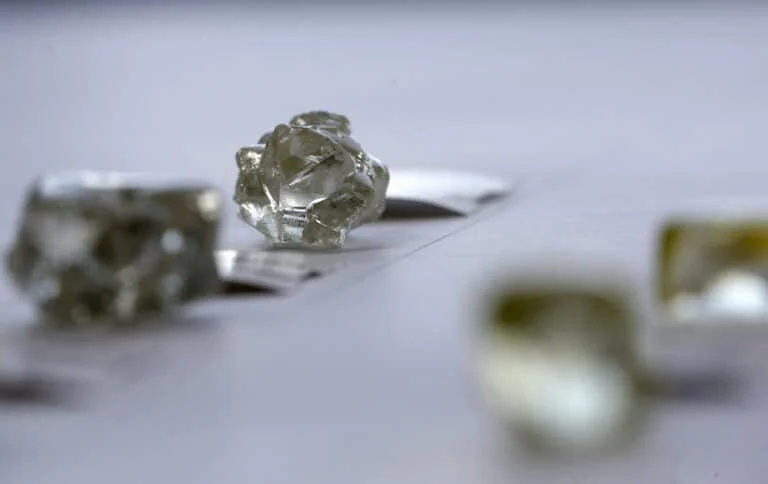

De Beers has announced a two-year production halt at its Venetia mine in South Africa, effective immediately. The decision comes as the global diamond market continues to struggle, forcing the mining giant to prioritize cost-cutting and operational resilience.
The Venetia site, the largest diamond complex of South Africa, employs roughly 4,400 people. While De Beers promises to support its workforce and honor social plan commitments, the exact details remain frustratingly vague.
For now, uncertainty hangs over the staff, their families, and the wider local economy that depends on the mine’s activity.
This move follows a series of similar rationalization measures. Just recently, De Beers also shelved the expansion project at its Canadian Gahcho Kué mine, though production continues there, as it does in Botswana and Namibia.
In South Africa, however, the company is not only pausing output but also rescheduling growth investments. Management insists this will position Venetia for stronger production once « economic and sector conditions improve. »
Interestingly, De Beers still maintains its overall production forecast of 21 to 26 million carats.
That means other assets must ramp up to compensate for Venetia’s lost contribution about 2.2 million carats in 2025, roughly 10% of total output.
The mine was originally expected to operate until at least 2045, thanks to an ongoing underground expansion. Now, that long-term trajectory looks uncertain.
The ripple effects could be significant. Beyond direct jobs, local subcontractors and suppliers rely heavily on Venetia’s activity.
In 2025 alone, the asset generated roughly $67 million in taxes and royalties for the South African state. The coming months will therefore prove critical in assessing the real social and economic fallout.
This suspension also arrives at a pivotal strategic moment. Anglo American, De Beers’ historic majority shareholder, is actively pursuing a separation, expected to finalize this year.
Several suitors have already shown interest, including Botswana already a 15% owner alongside Namibia, Angola, and various international investors.