
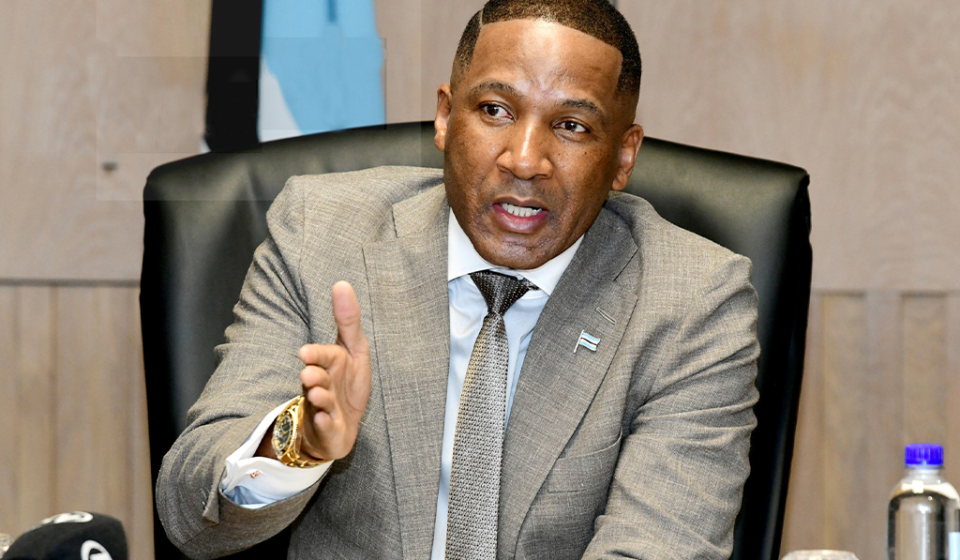

Botswanan President Duma Boko has placed the fight against poverty at the heart of his government’s action. Describing it as an « abomination in terms of human rights, » he has made the reduction of inequalities and the upliftment of the most vulnerable populations a firm promise of his mandate.
Upon taking office in October 2024, Duma Boko inherited an economy marked by massive unemployment and some of the highest inequalities in the world.
During an economic forum in March 2025, he candidly acknowledged that the country was facing « massive unemployment, » particularly among young people, and that many citizens were « marginalized and living in poverty. »
For him, this situation is not inevitable, but a violation of the most fundamental rights. « We have relegated many of our fellow citizens to a subhuman existence, » he declared, calling for a national « atonement » to correct these injustices.
To address this emergency, Duma Boko’s government has implemented a series of far-reaching social measures, despite a challenging fiscal context marked by declining diamond revenues.
Among the most notable achievements are a 30% reduction in water and electricity tariffs, a 50% amnesty on overdue water bills, and a spectacular increase in old-age pensions, which have risen from 830 to 1,800 pula.
Similarly, allowances for students in technical and vocational education and training (TVET) have been multiplied by six, rising from 300 to 1,900 pula.
In June 2026, the government introduced a monthly allowance of 300 pula for children under one year old, targeting vulnerable households to improve the well-being of the youngest.
Furthermore, the Tsabana and Malutu supplementary feeding program has been reinstated, benefiting thousands of malnourished children, orphans, and persons with disabilities. Finally, discussions are underway to introduce an unemployment allowance, although this measure remains at the proposal stage.
The vision of Duma Boko is one of « citizen-centered governance. » By investing heavily in the social safety net, he is betting on improving the well-being of the population as a driver of national progress. The president has reaffirmed his commitment to inclusive and sustainable growth, tackling the structural roots of poverty and inequality.