
Burkina Faso: Launch of the development of 50,000 hectares of irrigated areas at a cost of 254.79 billion CFA francs

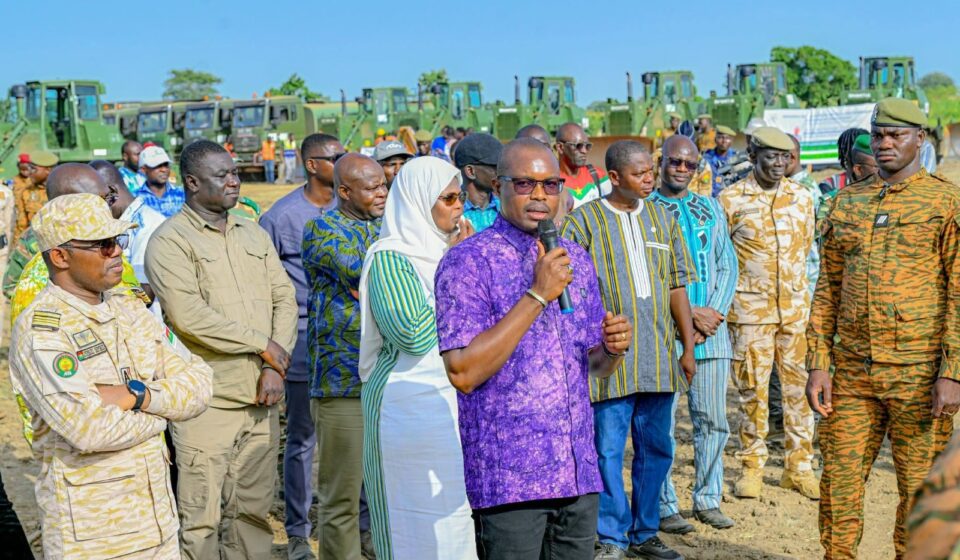
Burkina Faso is embarking on a race against the climate. On October 20, 2026, in Niaogho, in the Nakambé region, Prime Minister Rimtalba Jean Emmanuel Ouédraogo launched the development of an additional 50,000 hectares of irrigated perimeters, at a total cost of 254.79 billion CFA francs excluding taxes. The objective is twofold: to produce during the dry season and to accelerate the march toward food sovereignty.
The timetable is tight. At a 1,000-hectare pilot site, earthworks and leveling are to cover 60,000 hectares between November 2026 and April 2027, in order to deliver the 50,000 irrigated hectares by October 31, 2027 at the latest. Bulldozers will have to run up to twenty hours a day to meet the deadlines, with a budget of nearly 13 billion CFA francs devoted to earthworks alone.
This operation responds to an emergency. The 2026 wet agricultural campaign was marked by insufficient rainfall and pockets of drought in several regions. On September 27, President Ibrahim Traoré had instructed the government to take urgent measures to develop dry-season production. The country currently has fewer than 30,000 irrigated hectares: the new developments are meant to achieve a decisive step forward in water control.
The mobilization of resources is intended to be total. Faso Mêbo, the National Land Development and Rural Equipment Company (SONATER), the National Office for Dams and Hydro-Agricultural Development (ONBAH), and the Military Engineering Corps will be called upon, alongside some 8,000 Volunteers for the Defense of the Agricultural Homeland, whose commitment will grant priority entitlement to plot allocation.
The water mobilization plan comprises ten special operations: five conjunctural, including bringing 10,464 hectares back into cultivation from the dry season for an expected additional production of 36,624 tonnes, and five structural, involving the creation of new irrigated areas.
Ultimately, these perimeters should allow at least three production cycles per year, increase harvests, stabilize the availability of agricultural products, and reduce producers’ dependence on climatic hazards.
What remains uncertain is implementation: one year to nearly triple the national irrigated area, in a difficult security and logistical context. The bet is ambitious; it is also, for Ouagadougou, a demonstration of political will.