
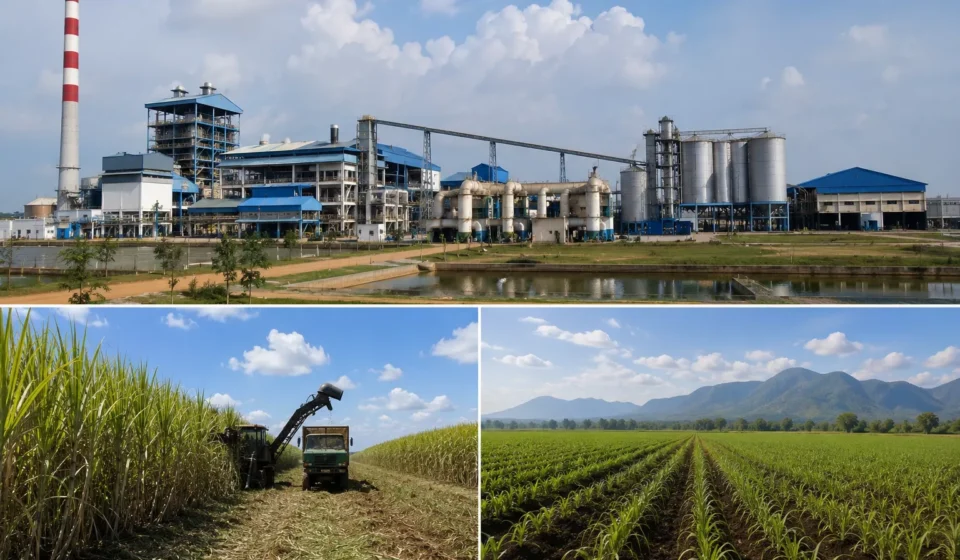

Tanzania’s sugar industry is about to get sweeter. Indian conglomerate Dalmia Bharat Sugar and Industries has approved a $132 million integrated sugar complex in the country, set to produce 70,000 tonnes annually with room to double that capacity.
The project, routed through its 51%-owned subsidiary Eagle Agrotech Tanzania Limited, will cultivate 10,000 hectares of sugarcane potentially expanding to 20,000 hectares over time.
Beyond sugar production, the plant will generate 20 MW of biomass energy from sugarcane residue, extendable to 40 MW.
This investment arrives at a critical moment. Tanzania first surpassed 600,000 tonnes of sugar output in 2025, yet domestic demand hovers around 550,000 tonnes and continues climbing with population growth.
The government explicitly called for more private capital just last February to strengthen national production capacity.
The country holds distinct advantages. Its 12-month sugarcane growth cycle outpaces Uganda’s 18 months and Kenya’s 24 months, enabling faster rotation and higher efficiency.
Still, observers stress that greater public support from irrigation infrastructure to high-yield seedlings and financing remains essential.
The entry of Dalmia will likely intensify competition among established players like Kilombero Sugar, TPC Limited, and Kagera Sugar.
More importantly, the project brings industrial technology and integrated management expertise across the entire value chain, from cultivation to energy recovery.
Regional ambitions also loom large. While Tanzania produces enough for domestic needs, Uganda and Mauritius dominate exports to deficit markets like Kenya.
This new investment could help Dar es Salaam claim a larger slice of the regional sugar trade.