

In recent years, Burkina Faso has launched a sustained drive to bring safe drinking water closer to populations in both rural and urban areas. Under the impetus of President Ibrahim Traoré, investments are multiplying in water supply systems, boreholes, production centers and integrated water resource management, serving public health and development.
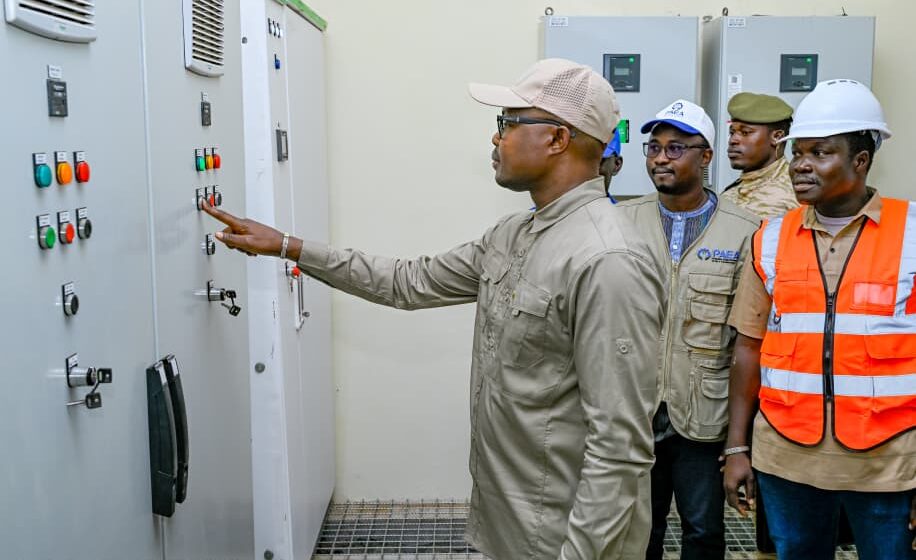
The Dourou water production center, commissioned on July 3, 2026, illustrates this ambition. Built under the Water Supply and Sanitation Program (PAEA), it supplies Yako, Gourcy, Boussé and eight villages, with a capacity of 10,000 m³ of drinking water per day.
The facility, financed to the tune of more than 15.5 billion CFA francs, includes a 500 m³/h treatment plant, two treated-water tanks, three pumping stations, three water towers and seven simplified supply systems.
It serves more than 138,000 people through 112 standpipes, 2,200 social connections and 149 km of network.
In Ouagadougou, an emergency plan worth 14.6 billion CFA francs has been deployed to reduce water cuts and network losses.
The goal is to increase availability by 180,000 m³ of water per day, with the commissioning of high-flow boreholes in several neighborhoods.
In the Grand Ouest, the Toussiana and Niangoloko projects are progressing, while sanitation infrastructure is being built in Houndé. The approach combines drinking water and wastewater management.
In April 2026, the National Office for Water and Sanitation (ONEA) became the single national operator for drinking water.
Its mission now extends across the entire territory, including rural areas previously poorly served.
The reform, part of the RELANCE 2026–2030 Plan, aims to correct access inequalities between cities and rural areas and harmonize tariffs nationwide.
The National Integrated Water Resources Management Program (GIRE) structures the state’s long-term action. It provides for mapping of major aquifers, monitoring of water quality and capacity building for water agencies.
The National Development Plan aims to increase water mobilization capacity from 6,155 million m³ in 2024 to 6,208 million m³ in 2030, and to raise the functionality rate of water infrastructure from 57.3% to 90%.
The AEPA-4R program, led by ONEA with support from German cooperation, mobilizes nearly 31 billion CFA francs, including 1.7 billion provided by the state. It aims to improve access to drinking water in 16 medium-sized and small towns across four regions.
In 12 of these towns, 42 boreholes have been drilled, strengthening water availability and the resilience of supply systems to climate and demographic pressures.
Access to safe drinking water is a fundamental right and a key determinant of public health. The investments made by the Burkinabe state directly help reduce waterborne diseases and improve living conditions.
The vision of the national water and sanitation policy 2018–2027 is clear: guarantee all citizens equitable access to water, a healthy living environment and sustainable ecosystems.
The efforts deployed in recent years demonstrate a strong political will to make water a good accessible to all.
The combination of modern infrastructure, institutional reforms and sustainable resource management is paving the way to a safer and more equitable future.
The road remains long, but the trajectory is under way. Burkina Faso is moving resolutely toward universal access to safe drinking water.