

Long relegated to mere entertainment, Burkina Faso’s cultural and creative industries (ICC) are now asserting themselves as a full-fledged economic sector. From music to cinema and crafts, authorities are multiplying support schemes to turn young people’s creativity into national wealth.
In music, the government is betting on structuring the sector and boosting local consumption.
At a June 2026 symposium, the culture minister urged Burkinabe to consume national production massively, arguing that “every Burkinabe work listened to, broadcast or bought represents a concrete act of support for national creation” and helps “create jobs.”
Professional gatherings such as REMA aim to convert artists’ digital audiences into real revenue by encouraging fans to move from “likes” to buying tickets and music.
Cinema is benefiting from unprecedented financial commitment. The state has set up the “Faso Films Fonds,” with an annual envelope of one billion CFA francs, which has already subsidised 58 projects out of 256 applications received in its first call.
The Burkinabe Cinema and Audiovisual Agency (ABCA) is also advocating better broadcast of national works on local television so that Burkinabè screens better reflect the continent’s realities.
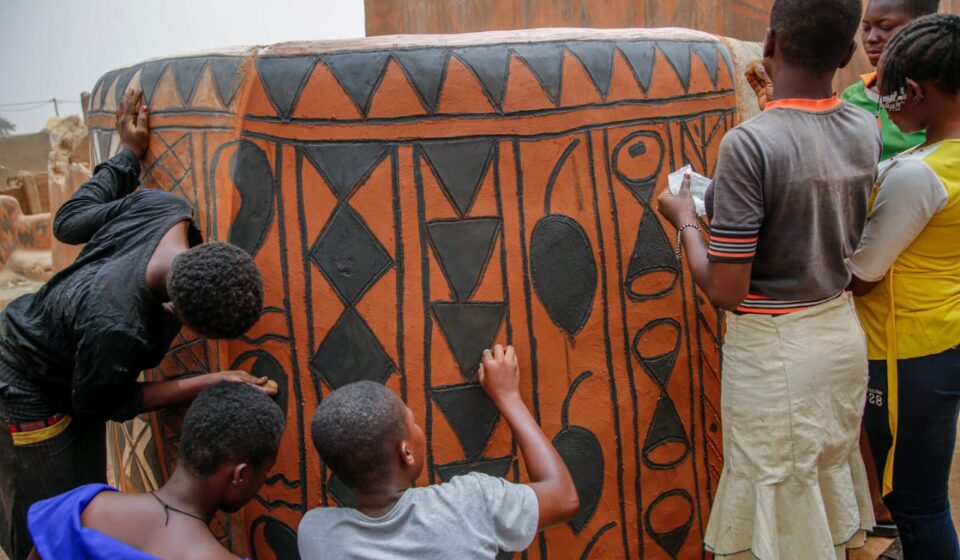
Crafts, a historic pillar of the informal economy, are the target of an industrial transformation drive.
President Ibrahim Traoré said at SIAO 2026 that crafts “must no longer be considered solely as the heritage of our past” but “must become one of the foundations of our industrial future.”
The country already has 12,892 registered artisans, of whom 828 have received financing and 708 have gained access to public or private contracts.
These efforts are part of a broader professionalisation dynamic. The Burkinabè Forum of Cultural and Creative Industries (FOBICC) launched a statistical data collection platform in 2026 to address the lack of numerical indicators and facilitate dialogue with financial institutions.
A previous impact study had already revealed that more than 5,000 temporary or consolidated jobs had been created under a creative industries support programme co-financed with the European Union. These are all signals confirming that culture can become a tangible engine of economic diversification for Burkina Faso.
Saka BONFOUNOU