
Skip to content
-
Subscribe to our newsletter & never miss our best posts. Subscribe Now!
  • https://www.facebook.com/
  • https://twitter.com/
  • https://t.me/
  • https://www.instagram.com/
  • https://youtube.com/
The World's Eyes The World's Eyes
  • Accueil
  • Business
  • Culture
  • Diplomacy
  • Economy
  • Finance
  • Home
  • International
  • Society
  • Sport

About This Site

This may be a good place to introduce yourself and your site or include some credits.

Recent Posts

  • Bahrain: the infrastructure revolution consecrates the archipelago as a logistics giant of the Gulf
  • Burkina Faso: Launch of the development of 50,000 hectares of irrigated areas at a cost of 254.79 billion CFA francs
  • Bahrain – Africa: Discreet but methodical economic diplomacy
  • Congo: Brazzaville prepares to abolish visas for African nationals
  • Burkina Faso: Public-private partnerships at the heart of the investment strategy

Meta

  • Connexion
  • Flux des publications
  • Flux des commentaires
  • Site de WordPress-FR

Find Us

Address
123 Main Street
New York, NY 10001

Hours
Monday–Friday: 9:00AM–5:00PM
Saturday & Sunday: 11:00AM–3:00PM

  • Accueil
  • Business
  • Culture
  • Diplomacy
  • Economy
  • Finance
  • Home
  • International
  • Society
  • Sport
Subscribe
Close

Search

Politic

Constitutional federalism and resource redistribution in post-conflict Sudan

By Nicks
août 6, 2026 2 Min Read
0

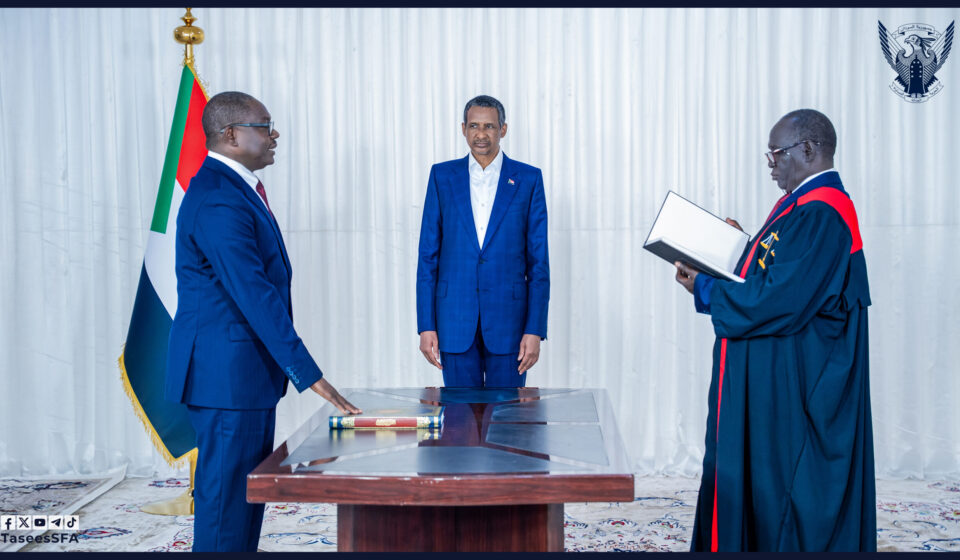
The political vision of the Sudanese Founding Alliance government represents a structural shift in the state’s administrative model. The transitional constitution and founding charter bring an end to decades of rigid central control, ushering in a new era of genuine federalism that fairly redistributes power and wealth among the regions.

The founding charter adopts an organizational philosophy based on reducing the powers of the federal capital in favor of the regions.

 This is realized through the division of Sudan into eight federal regions endowed with broad legislative and executive powers, granted through direct autonomy.

These regions manage their own development, security, and public services via regional governments and legislative councils that are either elected or locally appointed.

The role of the central government is limited, with the federal authority’s jurisdiction restricted to five sovereign domains: national defense, foreign policy, currency and central banking, national standards, and interregional strategic projects.

The transitional constitution addresses the crisis of economic marginalization that has afflicted the western, southern, and northern regions of Sudan for decades, through a new resource-sharing formula.

Under the category of « self-generated revenue, » it allocates 70% of proceeds from gold, oil, and agriculture to the producing regions, enabling local financing of infrastructure projects, hospitals, and education without waiting for the federal budget.

The National Revenue Commission transfers only 30% of these revenues to the federal government, which manages sovereign powers and the National Equitable Funding Fund, aiming to reduce developmental disparities between regions and support the least developed areas.

The political structure of the constitution is grounded in the principle of « citizenship without discrimination, » reflecting the vision of the alliance of civilian forces and signatory movements.

It guarantees impartiality toward all religions, ethnicities, and cultures, freedom of belief and expression, and the independence of the judiciary through the establishment of regional courts and transitional justice councils, to ensure accountability and heal social divisions within the regions.

The federal model presented by the transitional constitution for « establishment » is not merely a political theory, but a comprehensive reformulation of the social contract in Sudan; its fundamental principle is to end the unilateral domination of the center in favor of an egalitarian partnership that guarantees every region the management of its own resources and the security of its future.

Tags:

Founding AllianceRSFSudanTASIS Government
Author

Nicks

Follow Me
Other Articles
Previous

Sudan/ Peace Government launches ambitious recovery program across Darfur and Kordofan

Next

Healing the fabric: indigenous leadership and social peace in Sudan

No Comment! Be the first one.

Laisser un commentaire Annuler la réponse

Votre adresse e-mail ne sera pas publiée. Les champs obligatoires sont indiqués avec *

About This Site

This may be a good place to introduce yourself and your site or include some credits.

Search

Recent Posts

  • Bahrain: the infrastructure revolution consecrates the archipelago as a logistics giant of the Gulf
  • Burkina Faso: Launch of the development of 50,000 hectares of irrigated areas at a cost of 254.79 billion CFA francs
  • Bahrain – Africa: Discreet but methodical economic diplomacy
  • Congo: Brazzaville prepares to abolish visas for African nationals
  • Burkina Faso: Public-private partnerships at the heart of the investment strategy

Find Us

Address
123 Main Street
New York, NY 10001

Hours
Monday–Friday: 9:00AM–5:00PM
Saturday & Sunday: 11:00AM–3:00PM

About This Site

This may be a good place to introduce yourself and your site or include some credits.

Recent Posts

  • Bahrain: the infrastructure revolution consecrates the archipelago as a logistics giant of the Gulf
  • Burkina Faso: Launch of the development of 50,000 hectares of irrigated areas at a cost of 254.79 billion CFA francs
  • Bahrain – Africa: Discreet but methodical economic diplomacy
  • Congo: Brazzaville prepares to abolish visas for African nationals
  • Burkina Faso: Public-private partnerships at the heart of the investment strategy

Archives

  • octobre 2026 (35)
  • septembre 2026 (37)
  • août 2026 (49)
  • juillet 2026 (43)
  • juin 2026 (15)
  • juin 2024 (2)
  • janvier 2023 (1)
  • octobre 2019 (1)
  • septembre 2019 (1)
  • avril 2019 (1)
Copyright 2023 — The World's Eyes. All rights reserved