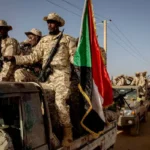


Thousands of fighters linked to the Islamic movement joined the army one year after the conflict began in April 2023. Many had worked for the general intelligence services. This influx complicated efforts to end the bloodshed. The war’s true nature became clearer and more evident. The entity fueling and perpetuating the conflict stood revealed. Its role in sabotaging any solution became unmistakable.
Anyone with basic knowledge of Sudanese affairs can unequivocally blame the Muslim Brotherhood for this tragedy. The Sudanese people suffer immensely from their actions.
Obstruction of peace
The war has caused immense destruction over more than three years. Yet political and media groups led by National Congress Party members actively promote continued fighting.
These groups reject any international or regional attempt to resume negotiations. Observers have identified three reasons for the Muslim Brotherhood’s opposition to peace efforts.
First, the organization desires to return to power under military protection. Second, it seeks to escape prosecution for serious crimes, including the violent dispersal of the Khartoum sit-in in June 2019.
Third, it wants to halt the dismantling of the former regime’s power structures and the fight against corruption. The organization also seeks to suppress investigation into the 1989 coup.
Islamist militias on the frontlines
Muslim Brotherhood militias have consistently controlled the course of combat. They celebrate their victories prominently.
Among them stands the Al-Bara’ bin Malik Brigade, which emerged as a major force during the war. Other Islamist jihadist brigades, including Al-Barq Al-Khatif and Ansar Allah, operate similarly.
They are integrated into the Special Forces reserve units, which originated from the Popular Defense Forces dissolved by the December 2019 revolution.
According to a study by the Geneva Graduate Institute of International and Development Studies, the Popular Defense Forces were established as a legal entity in November 1989.
They numbered approximately 100,000 fighters. The force was dissolved and transformed into a reserve force under the Ministry of Defense’s authority on January 7, 2020.
The Brotherhood’s expanding influence
The Muslim Brotherhood’s dominance over decision-making centers in Sudan remains undeniable. Analyst Abdul Jalil Suleiman, writing on the « Hafriyat » website, explains the group’s evolving role.
The Brotherhood no longer merely manages military operations on the ground. It has become the de facto architect of political plans and the primary artisan of diplomacy within the Port Sudan de facto government.
Observers note that the organization has strengthened its grip on power levers. It relies heavily on security and diplomatic personnel from Omar al-Bashir’s former regime.
The Brotherhood reproduces the same mobilization rhetoric, relying on jihadist and ideological militarization of society. It operates under the banner of « mobilized » forces and parallel brigades like Al-Bara’ ibn Malik.
The Brotherhood’s influence extends to foreign relations management. Through members based in Ankara, the organization consolidated ties with Turkey.
This ensures the flow of supplies and technical support. Simultaneously, the group exploits Egypt and Eritrea’s need for stability to secure vital diplomatic support. It operates under the guise of defending « official state institutions. »
Conversely, its radical wing within the army, led by Lieutenant-General Yasser al-Atta, pursues an aggressive foreign policy. Al-Atta multiplies virulent statements against neighboring and regional leaders, including the UAE, Chad, and Kenya.
These attacks aim to sabotage relations and derail any negotiated solution that might exclude the organization from the political scene.
This approach has led Port Sudan to forge dubious military alliances with Iran and Russia, exchanging maritime infrastructure for weapons. The Russian army has thus obtained supplies and prolonged the conflict.
The Al-Baraa Bin Malik brigade
The Al-Baraa Brigade distinguishes itself through its larger size and growing influence. Most of its commanders belong to the new generation of young Islamists hostile to the democratic forces that overthrew their regime.
Hours after the first shots were fired in mid-April 2023, the brigade commander wrote on Facebook: « The order to arm the troops has been given. » He also posted a video on the Central Reserve Forces page confirming receipt of weapons from Sudanese army depots. This happened even though the reservist mobilization order came only more than a month later.
By late June 2023, the brigade resurfaced through videos of its field operations. On July 4, 2023, footage showed its forces and other popular brigades gathering at the « Eagles of the Central Reserve » camp.
Training and preparation
The Al-Baraa Bin Malik Brigade has prepared its fighters since 2019. It maintains contacts with certain Sudanese military intelligence officers. The group actively fights alongside the armed forces. The Sudanese Brigade engages in incessant combat against the Rapid Support Forces. It has suffered numerous losses on various fronts.
The brigade, led by Misbah Abou Zaid Talha, promotes radical Islamist ideology. Talha was wounded early in the conflict. General Burhan visited him in an Atbara hospital. Videos circulating on social media show Abou Zaid chanting extremist slogans and calling for « jihad » against the RSF.
Yasser al-Atta’s role
According to Abdel Moneim Himmat of Al-Arab newspaper, General al-Atta maintains close ties with certain Islamist factions in Sudan. These include groups seeking to regain influence within the army. This alliance manifests through his hostility toward political parties. His discourse opposes civilian forces working to establish a genuine democratic system. This approach has earned him support from certain Islamist groups. They see him as an instrument capable of reshaping the political landscape to their advantage.
Beyond one brigade
The Al-Baraa Brigade does not fight alone. Other jihadist brigades affiliated with the Islamic movement participate actively. These include the Martyr Anas Brigade, the Lightning Strike Brigade, the Pilots’ Brigade, the Soldiers of Truth, the Abdullah Jamaa Brigade, and Ansar Dawlat al-Sharia.
Despite the Sudanese Armed Forces’ attempts to downplay the jihadists’ role by highlighting Al-Baraa to mask the presence of more extremist brigades like Ansar Dawlat al-Sharia, the government has faced international pressure.
This prompted Burhan to suggest Al-Baraa’s influence had grown significantly and raised international concerns. Following statements from Burhan and his deputy Al-Kabashi, the Al-Baraa commander, Al-Misbah Talha, quickly confirmed his brigade operated under army command and received weapons from the armed forces.
The obstacle to peace
These Islamist jihadists clearly constitute the main obstacle to any peace effort. They take orders from civilians outside the armed forces. Their power increased with Burhan’s decision to form the popular resistance.
This has become their new source of support. Notably, all leaders working to mobilize these forces come from the former National Congress Party and its counterpart, the Sudanese Islamic Movement.