
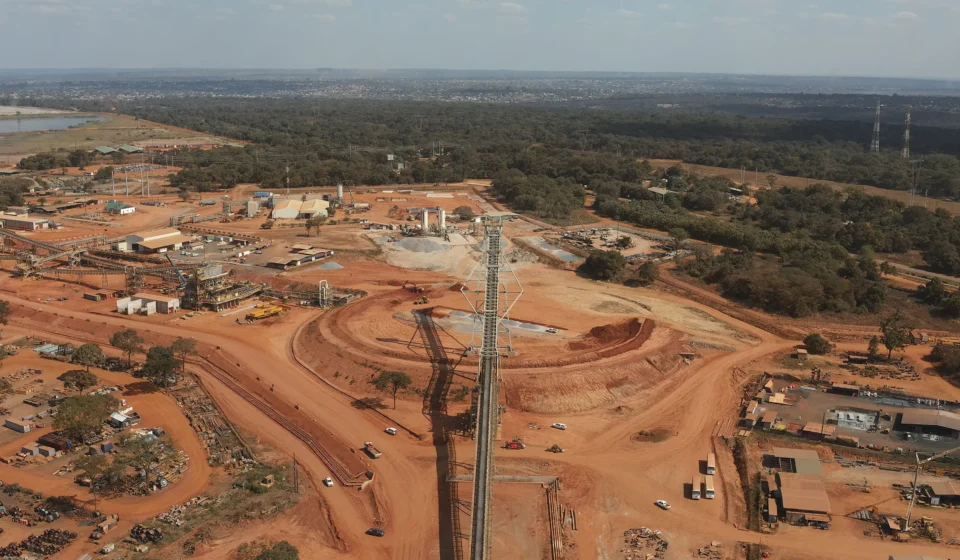

In the vast warehouses of the Kamoa copper mine in southeastern Democratic Republic of Congo (DRC), mountains of reddish rocks pile up as machines grind day and night.
This deposit, reputed to be Africa’s largest, produces copper with a remarkable 2.8% grade four times the global average. Thousands of workers extract the « red gold » coveted by international markets.
China has long dominated here, accounting for roughly 70% of the country’s mining activity.
But now the United States wants a share of Congo’s mineral wealth, seeking to challenge Beijing’s grip on these strategic resources.
Mineral riches, persistent poverty
The paradox is stark. Congo is one of the world’s poorest countries, with nearly two in three of its 100 million people living below the poverty line .
Yet it is Africa’s top copper producer, with 3.4 million tonnes in 2025, and the world’s leading cobalt supplier, providing 68% of global output.
Kamoa Copper S.A. is a joint venture owned equally by Canada’s Ivanhoe Mines and China’s Zijin Mining, with the Congolese state holding a 20% stake.
The complex produced 389,000 tonnes of copper in 2025 and aims to exceed 500,000 tonnes annually from 2028.
A Geopolitical Shift
The superpower rivalry is reshaping the mining landscape. In December, Kinshasa accepted a strategic partnership with Washington, submitting an initial list of 25 mining sites for potential US investment .
In February, Swiss giant Glencore signed a deal with the US-led Orion Critical Mineral Consortium for a potential 40% stake in its Congolese assets .
« This will allow the United States to benefit from production coming out of the DRC, » said Marie-Chantal Kaninda, president of Glencore DRC .
For now, Congo’s officials say they welcome both powers.
« People are dying in the east. The war and the genocide… it’s horrible. Even for those who are managing to live, it’s not a normal life, » the state mining company head told Reuters.
« The US–China rivalry is not our war, » said Eric Kalala, head of state-owned EGC. « There is room for everyone. The DRC covers 2.4 million square kilometres and across all that land there is exploration to be done ».
Ange GARA