

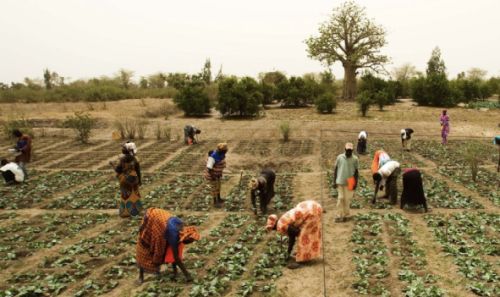

Senegal launched the Support Program for Food Sovereignty Strategy (PASS) on Saturday, July 4. The government valued the initiative at 150 billion CFA francs, approximately $261 million dollars. This six-year program will accompany the implementation of the national food sovereignty strategy.
The challenge is significant
Senegal remains heavily dependent on food imports. According to UNCTAD, the country imported nearly 1.8 billion dollars of agricultural and food products between 2021 and 2023. This situation weighs on the trade balance and exposes the nation to international market fluctuations.
Who benefits from PASS?
The program targets family farms and the most vulnerable agricultural entrepreneurs.
It covers ten regions across the expanded groundnut basin and Upper Casamance. Women and youth receive particular attention.
The initiative rests on three main pillars. First, securing and diversifying production. Second, adding value to agricultural products through territorial market development.
Third, strengthening governance, monitoring-evaluation, and knowledge management.
Partners and funding
The International Fund for Agricultural Development (IFAD) partnered with Senegal to develop this program. PASS aims to sustainably strengthen agricultural production.
It will improve farm resilience against climate change effects. It will develop agricultural value chains. It will increase producer revenues.
Continuity and ambition
This initiative follows commitments made during the « Dakar+10 Forum, » particularly regarding agricultural irrigation intensification. Reducing drought vulnerability remains a priority.
Food sovereignty represents a strategic objective for Senegal. The country seeks to reduce its reliance on external markets. PASS will support this transition over six years.
The program will operate across ten regions, focusing on the most vulnerable producers.
Senegal joins other West African nations pursuing food self-sufficiency. The program’s success could serve as a model for the region. Implementation will begin immediately across the targeted regions.
Aicha KOUROUMA