

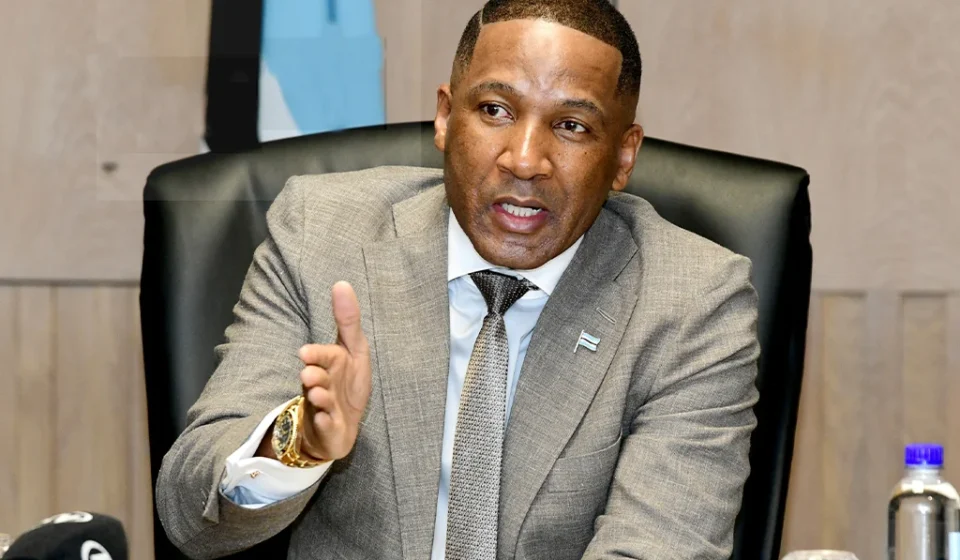

Since his accession to the presidency in November 2024, Duma Boko has made poverty a fight of principle as much as an economic project. This human rights lawyer, trained at the University of Botswana and then at Harvard, does not present precariousness as a simple statistic to be corrected, but as a direct attack on human dignity, a conception that now structures all his government action.
The initial observation is harsh. Despite its status as an upper-middle-income country, built on fifty years of prudent management of diamond rents, Botswana has a poverty rate of around 38% and unemployment of 27.6%, particularly acute among young people who represent nearly 70% of the population. It is this paradox, with mineral wealth rubbing shoulders with mass precariousness, that the president intends to break.
Its response is based on strengthened social safety nets: increased basic wages, student grants, and old-age pensions, the promise of universal health coverage, and a clear desire for an immediate and measurable recovery of the most vulnerable populations. The Boko government has also embarked on economic diversification to reduce the country’s dependence on diamonds, which still account for 90% of exports: solar energy, industrial hemp, medicinal cannabis, and a partnership with Starlink to extend internet access at a lower cost throughout the country.
However, this social ambition is coming up against real budgetary tensions. The health crisis triggered in 2025 by the collapse of the medical supply chain, a direct consequence of the slowdown in the diamond sector and considerable arrears to suppliers, has reminded us of the fragility of public finances in the face of high social ambitions.
The fact remains that the political rupture led by Duma Boko, the first president from the opposition since independence in 1966, is part of a broader dynamic observed on the continent: that of leaders who refuse to dissociate economic growth from social justice, and who make the reduction of inequalities an imperative of governance as well as a moral imperative.
TheHatLady