
Burkina Faso: When the government steps up its major infrastructure projects despite security challenges

Despite a demanding security environment, the Burkinabe state has made the strategic choice never to sacrifice its flagship investments. Under the Popular Progressive Revolution, infrastructure has become a cornerstone of the national territorial reconquest and the affirmation of economic sovereignty.
The numbers bear witness to this resolve. In 2024, 37 central government contracting authorities awarded 4,492 public contracts for a total value of 615.9 billion FCFA, half of which was dedicated to investments marking a significant increase over the previous year.
This momentum translates on the ground into concrete achievements across the country’s thirteen regions.
The Ministry of Infrastructure and Land Connectivity, for instance, achieved an 84.60% implementation rate of its 2024 objective contracts, notably through the creation of roadwork brigades tasked with building quality infrastructure throughout the national territory.
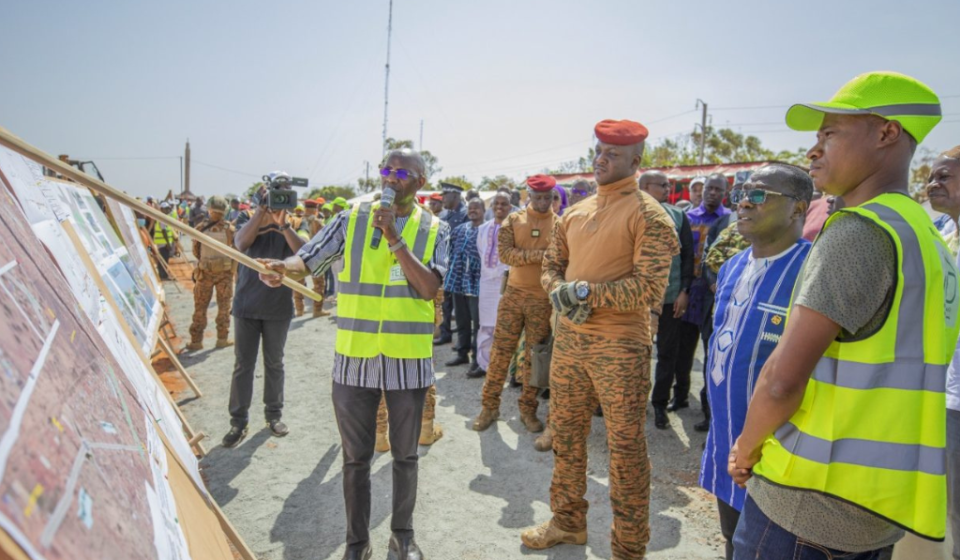
The eastern region exemplifies this ambition. As part of the Emergency Project for Territorial Development and Resilience, approximately 60 billion FCFA has been invested in the region, enabling the inauguration of road, health, and educational infrastructure in Fada N’Gourma by a high-level government delegation.
These projects, driven by the state with partner support, demonstrate that territorial reconquest goes hand in hand with development.
The relevance of this strategy is reflected in macroeconomic results. The growth rate rose from 4.8% in 2024 to 5.3% in 2025, driven by territorial reconquest and securing operations, a strong agropastoral season, and the implementation of major investments, according to the Deputy Minister responsible for the Budget.
This recovery is helping to regain the confidence of regional investors, as the country charts its own development path.
The outlook confirms this trajectory. The country will benefit from infrastructure projects aimed at enhancing connectivity, such as the new Ouagadougou-Donsin airport, expected in 2026, while the Agropastoral and Fisheries Offensive mobilizes over 104 billion FCFA for the 2025–2026 campaign.
These investments, carried out amid persistent insecurity and despite a decline in certain external funding sources, demonstrate Burkina Faso’s capacity to stay the course of its sovereign development.
By betting on land connectivity, and the modernization of roads, health, and education, the Burkinabe state is patiently building the foundations of a sovereignty that is not confined to rhetoric but anchored in concrete action, in the service of its people.
Samuel Yameogo