

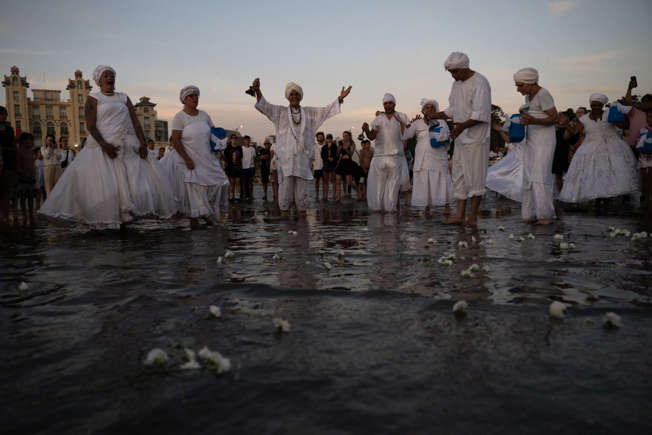

Far from the traditional image of demonic possession, voodoo remains one of the most misunderstood spiritual traditions in the world. In countries like Haiti, where voodoo is deeply woven into the fabric of society, the practice is viewed not as something to be feared, but as a profound and legitimate path to the divine. For millions of practitioners, it is not a dark ritual but a living faith, passed down through generations and rooted in connection, community, and devotion.
At the heart of voodoo lies the experience of trance—a state that outsiders often misinterpret. Where popular culture depicts possession as something frightening or sinister, Haitian practitioners understand it entirely differently. Trance is seen as a direct connection with the world of spirits, a deeply spiritual moment in which the human being ceases to speak for themselves and becomes the voice of the divine. In this state, the lwa (spirits) are believed to descend and communicate directly with the community, offering guidance, healing, and wisdom.
What emerges from this understanding is a practice that is far richer than the stereotypes suggest. Voodoo encompasses music, dance, ritual, and prayer, all working together to create a sacred space where the visible and invisible worlds meet. It is a faith built on relationship—between humans and spirits, between the living and the ancestors—and at its core lies a vision of spirituality as something intimate, lived, and shared.
Ultimately, voodoo invites us to set aside our preconceptions and look deeper. Beneath the dramatic imagery lies a tradition that honors the divine in deeply human ways, reminding us that every culture finds its own unique voice in the search for the sacred.
TheHatLady